
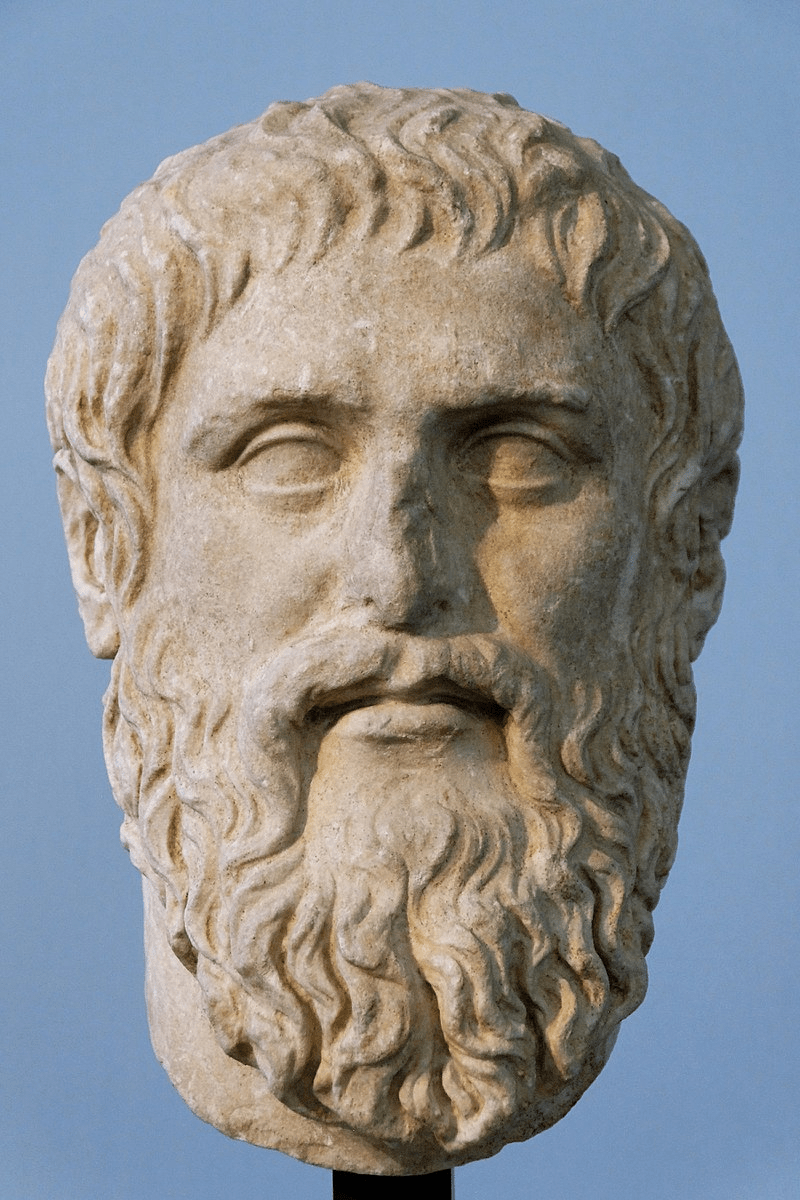
Photo credit: By © Marie-Lan Nguyen / Wikimedia Commons, Public Domain, https://commons.wikimedia.org/w/index.php?curid=7831217
When we think of philanthropy, what comes to mind? Perhaps billionaires donating fortunes to global charities, or foundations funding medical research and education. But what if the most impactful philanthropist in history never donated a single coin? What if his gift to humanity was something far greater than wealth—something that has shaped civilizations for over two thousand years?
Meet Plato (c. 428–348 BCE), the ancient Greek philosopher whose legacy proves that true philanthropy is not measured in money but in ideas. Though he never wrote a cheque, built hospitals, or funded scholarships, his intellectual generosity changed the course of history.
A Different Kind of Philanthropy
Philanthropy comes from the Greek words philos (love) and anthropos (human). It’s about a deep love for humanity and a commitment to its betterment. If that is the definition, who could be more philanthropic than Plato—a man who spent his life questioning the nature of justice, truth, and morality to help humanity understand itself?
His contributions were not financial but philosophical, laying the intellectual foundation for Western thought. If philanthropy is about leaving the world better than you found it, then Plato was one of the greatest benefactors of all time.
The Academy: An Endowment of the Mind
Imagine a place where people from different backgrounds, rich or poor, could gather to discuss the deepest mysteries of life. That’s what Plato created when he founded the Academy in Athens around 387 BCE. It was the first known institution of higher learning in the Western world, a place where students studied philosophy, mathematics, science, and ethics—for free.
The Academy was Plato’s gift to the world, an institution that would survive for nearly 900 years until Emperor Justinian shut it down in 529 CE. One of its most famous students? Aristotle, who would go on to tutor Alexander the Great and shape scientific thought for centuries.
Wouldn’t any modern philanthropist be proud to have their name attached to a legacy that lasted nearly a millennium?
The Philosopher-King: A Blueprint for Justice
In his famous work, The Republic, Plato asked: What if the world were ruled not by kings obsessed with power, but by wise and virtuous philosophers? He envisioned a society where leaders governed not for personal gain but for the well-being of all—a radical idea at the time and, some might argue, still a dream today.
“There will be no end to the troubles of states, or of humanity itself, till philosophers become kings in this world.”
—Plato, The Republic
Was he merely a dreamer, or was this his way of giving humanity a moral and intellectual compass? Many modern leaders, from Thomas Jefferson to Mahatma Gandhi, have drawn inspiration from his vision. Even democracies today owe much to Plato’s insistence on reasoned governance.
A Gift That Keeps on Giving: The Power of Ideas
Unlike gold and silver, ideas do not rust, decay, or run out. Plato’s dialogues, such as The Republic, The Symposium, and Phaedo, continue to shape discussions on justice, love, ethics, and the meaning of life. His work has influenced Christian theology, Islamic philosophy, the Renaissance, and even contemporary political thought.
By asking questions rather than providing fixed answers, Plato empowered generations to think critically and challenge the status quo. Isn’t that a greater gift than any financial donation?
Plato vs. Modern Philanthropists: Who Gave More?
Andrew Carnegie built libraries. Bill Gates funds vaccines. But how many of us still read The Republic? How many governments still wrestle with Plato’s ideas on justice? While money can solve immediate problems, Plato’s gift—the love of wisdom—has endured for over two millennia.
Perhaps the real question is: If ideas can last longer than money, who is the greater philanthropist?
The True Measure of Giving
Plato never donated to charities, yet he gave the world something priceless: a way to think, to reason, and to imagine a better society. In the end, his story challenges us to rethink philanthropy itself. Must we measure generosity in dollars, or should we measure it in impact?
So, the next time you hear the word “philanthropist,” don’t just think of billionaires and foundations. Think of Plato, the man who gave the world not gold, but wisdom—and whose generosity still enriches us today.
What Do You Think?
Plato’s legacy challenges us to rethink what it truly means to give. Is philanthropy only about wealth, or is it about shaping minds and societies for the better? Now, we’d love to hear from you!
💬 Share your thoughts in the comments:
- Do you think ideas can be more powerful than money in shaping the world?
- Who else, besides Plato, do you consider a great philanthropist of knowledge?
- If you could leave a lasting impact on humanity, what would it be?
Let’s keep the conversation going! 🚀✨
About From the Heart
HeartBeat Blog’s From the Heart series is a heartfelt exploration of the many ways we can create a kinder world. Making a difference and paying it forward don’t have to follow a single path—just because someone chooses a different way to contribute doesn’t mean their impact is any less valuable. Acts of kindness, generosity, and positive change take many forms—some visible, some quiet, but all meaningful. True change happens when we acknowledge and respect the diverse ways people give back, whether through direct action, advocacy, education, or simply offering support in ways that might not be immediately obvious. Every effort counts, and the key is not to measure impact by our own standards alone but to recognise the many ways people strive to make the world better in their own way.
From the Heart captures this spirit through essays, opinions, poetry, non-book reviews, and musings—sharing both everyday and extraordinary moments that inspire change. Alongside these reflections, you’ll find news, event announcements, and updates from the Store with a Heart community, celebrating the many ways we can impact lives and lift one another up. Whether through personal stories, creative expression, or reflections on life’s small but meaningful acts, From the Heart offers an open space to inspire, connect, and celebrate the journey toward a better tomorrow.
Announcing the Winners of the Universal Kindness Awards 2026
Let us congratulate the recipients of the Universal Kindness Awards 2026, honouring individuals and organisations who exemplify the power of kindness, compassion, and positive impact.
Keep reading
The Christmas Season and Philanthropy: A Time for Giving and Goodwill
What if Christmas wasn’t about receiving gifts, but about rewiring your brain for happiness? Sounds strange, right? Discover how holiday generosity impacts us in surprising ways—read on to find out!
Keep readingSomething went wrong. Please refresh the page and/or try again.
Disclaimer
The content on HeartBeat, a blog by Store with a Heart, is intended for informational and entertainment purposes only. The views expressed by authors and contributors do not necessarily reflect those of Store with a Heart. While we strive for accuracy, we do not guarantee the completeness, reliability, or validity of any information shared. None of HeartBeat‘s write-ups are paid for by any of the individuals, organisations, or brands mentioned. Any ads or sponsored posts are clearly marked as such. For more details, please review our Full Disclaimer, Privacy Policy, and Terms of Service.
HeartBeat Links
Here are shortcuts to our content:
- Book Review Requests
- Book Review Requests Step 3
- Books with a Heart
- Content Submissions
- Editorial Team and Guidelines
- From the Heart: Stories, Reflections, and Inspiration for a Kinder World
- Heart to Heart: Inspiring Action, One Interview at a Time
- HeartBeat: Your Pulse of Positivity
- Important Announcement
- Memorabilia
- Memorabilia for Award Winners
- Our Blog’s Disclaimer
- Our Blog’s Privacy Policy
- Our Blog’s Terms of Service
- Purpose-driven Insights
- The Difference Makers
- Universal Kindness Awards Nomination Form Step 1 and Step 2
- Universal Kindness Awards Paid Nominations, Sponsorships, and Other Forms of Financial Support for the Awards
- Universal Kindness Awards Policy for Reporting on Awardees and Minimum Nominee Criteria
- Universal Kindness Awards Supporters
- Universal Kindness Awards – Nomination Policies
- Voluntary Contribution Policy
- Winners of the Universal Kindness Awards
Nominate for the Universal Kindness Awards
We are accepting nominations all year round. It’s free to repay kindness with kindness. There’s no cost to make a submission (unless you choose to voluntarily pay for the nomination and help pay it forward). Nominate a difference maker today!
❤️❤️❤️❤️❤️
Our Collective Impact
To know how our entire global community of generous individuals and participating platforms has been making a difference, click here.
❤️❤️❤️❤️❤️
Visit Store with a Heart‘s online shop today!
Make a difference with every carbon-neutral gift that makes a difference. Check out our products and services. As you are one of our valued community members, you can use the code SWAH10 to get your 10% discount on every purchase you make.
“No act of kindness, no matter how small, is ever wasted.” – Aesop
Copyright © 2020-2025 Store with a Heart®: Making a Difference. All Rights Reserved.
Discover more from HeartBeat Blog by Store with a Heart
Subscribe to get the latest posts sent to your email.
 HeartBeat Blog by Store with a Heart