
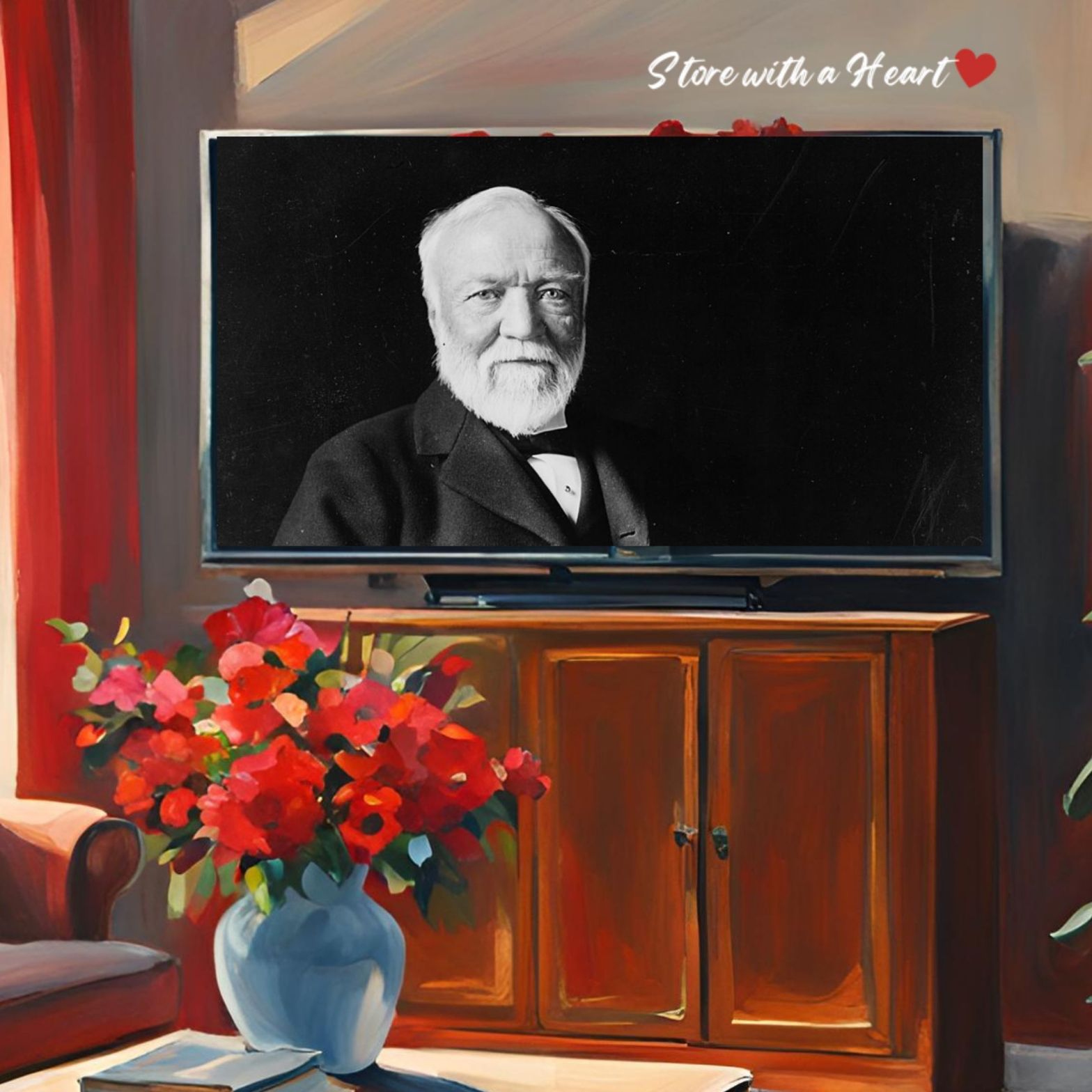
Would you spend the second half of your life giving away the fortune you built in the first half? Andrew Carnegie did. But what really drove the ‘Prince of Steel’ to philanthropy? Read on to uncover the real story.
A Humble Start: The Son of a Weaver
Born in Dunfermline, Scotland, on November 25, 1835, Andrew Carnegie grew up in a modest, one-room home. His father, a handloom weaver, faced economic hardship as the Industrial Revolution rendered traditional weaving obsolete. Seeking better opportunities, the Carnegie family emigrated to the United States in 1848, settling in Allegheny, Pennsylvania. At the age of 13, young Andrew began working as a bobbin boy in a cotton factory, earning $1.20 per week. This early exposure to labor likely influenced his later emphasis on efficiency and progress.
Carnegie’s thirst for knowledge was insatiable. Colonel James Anderson, a local benefactor, opened his personal library to working boys, allowing Carnegie access to books that shaped his thinking. Reflecting on this generosity, Carnegie later wrote, “If ever wealth came to me, it should be used to establish free libraries.” This experience planted the seed for his future dedication to philanthropy.
Building an Empire: Ruthless or Visionary?
By his early 30s, Carnegie had transitioned from a telegraph operator to a prominent figure in the railroad industry. However, it was his venture into steel that solidified his status as one of history’s wealthiest individuals. Founding the Carnegie Steel Company, he revolutionized the industry by mass-producing high-quality steel at lower costs, supplying materials essential for America’s railways, bridges, and skyscrapers.
Carnegie’s business practices were not without controversy. The 1892 Homestead Strike stands out as a significant blemish on his record. During this labor dispute, steelworkers protesting wage cuts clashed violently with Pinkerton guards. This incident raises questions: Was Carnegie a benevolent industrialist, or did he amass his fortune through the exploitation of workers? Perhaps the truth encompasses elements of both perspectives.
The Philanthropic Revolution: Giving It All Away

At 65, Carnegie made headlines by selling his steel empire to J.P. Morgan for $480 million (approximately $13.6 billion today). Instead of retaining his wealth, he embarked on an unprecedented philanthropic journey, aiming to distribute the majority of his fortune for the public good.
Carnegie’s philosophy was clear: The affluent have a moral obligation to benefit society. He funded the establishment of over 2,500 libraries worldwide, believing that access to knowledge was a powerful tool for self-improvement. However, one might ponder: Is a free library sufficient for someone who lacks the time or resources to utilize it?
Beyond libraries, Carnegie’s legacy includes the founding of institutions such as Carnegie Hall and Carnegie Mellon University, as well as significant contributions to world peace initiatives. Notably, he was known to decline personal charity requests, prompting reflection on whether his philanthropy was driven by genuine altruism or a desire to reshape his legacy post-Homestead.
A Complex Legacy: The Billionaire Blueprint?
Carnegie’s approach to wealth and giving has influenced modern philanthropists like Bill Gates and Warren Buffett. Yet, in today’s world of escalating inequality, can the ultra-rich realistically emulate his model?
His legacy prompts enduring questions: Should billionaires determine the allocation of their wealth, or should it be subject to public taxation? Can immense wealth ever be entirely ethical, regardless of charitable endeavors? Ultimately, does philanthropy absolve the moral complexities inherent in capitalism?
Carnegie’s libraries continue to serve communities, his institutions flourish, and his name remains prominent in history. But whether he was a hero or an opportunist—that remains a debate worth engaging in.
References
- https://www.carnegie.org/about/our-history/andrew-carnegie/
- https://www.britannica.com/biography/Andrew-Carnegie
- https://www.history.com/topics/industrial-revolution/andrew-carnegie
- https://www.theguardian.com/books/2019/oct/19/andrew-carnegie-review-david-nasaw
Call to Action: Join the Conversation
- Can extreme wealth ever be ethical, even if given away?
- Is philanthropy a moral duty or a way to control the narrative?
- Would the world be better if billionaires didn’t exist at all?
Share your thoughts below!
About From the Heart
HeartBeat Blog’s From the Heart series is a heartfelt exploration of the many ways we can create a kinder world. Making a difference and paying it forward don’t have to follow a single path—just because someone chooses a different way to contribute doesn’t mean their impact is any less valuable. Acts of kindness, generosity, and positive change take many forms—some visible, some quiet, but all meaningful. True change happens when we acknowledge and respect the diverse ways people give back, whether through direct action, advocacy, education, or simply offering support in ways that might not be immediately obvious. Every effort counts, and the key is not to measure impact by our own standards alone but to recognise the many ways people strive to make the world better in their own way.
From the Heart captures this spirit through essays, opinions, poetry, non-book reviews, and musings—sharing both everyday and extraordinary moments that inspire change. Alongside these reflections, you’ll find news, event announcements, and updates from the Store with a Heart community, celebrating the many ways we can impact lives and lift one another up. Whether through personal stories, creative expression, or reflections on life’s small but meaningful acts, From the Heart offers an open space to inspire, connect, and celebrate the journey toward a better tomorrow.

Sam and the Home for the Aged by John Grey (A Poem)
What kind of life settles into poems written between countries and years? John Grey invites readers to discover the answer by reading the piece and letting its quiet weight unfold.
Keep reading
Announcing the Winners of the Universal Kindness Awards 2026
Let us congratulate the recipients of the Universal Kindness Awards 2026, honouring individuals and organisations who exemplify the power of kindness, compassion, and positive impact.
Keep readingSomething went wrong. Please refresh the page and/or try again.
Disclaimer
The content on HeartBeat, a blog by Store with a Heart, is intended for informational and entertainment purposes only. The views expressed by authors and contributors do not necessarily reflect those of Store with a Heart. While we strive for accuracy, we do not guarantee the completeness, reliability, or validity of any information shared. None of HeartBeat‘s write-ups are paid for by any of the individuals, organisations, or brands mentioned. Any ads or sponsored posts are clearly marked as such. For more details, please review our Full Disclaimer, Privacy Policy, and Terms of Service.
HeartBeat Links
Here are shortcuts to our content:
- Book Review Requests
- Book Review Requests Step 3
- Books with a Heart
- Content Submissions
- Editorial Team and Guidelines
- From the Heart: Stories, Reflections, and Inspiration for a Kinder World
- Heart to Heart: Inspiring Action, One Interview at a Time
- HeartBeat: Your Pulse of Positivity
- Important Announcement
- Memorabilia
- Memorabilia for Award Winners
- Our Blog’s Disclaimer
- Our Blog’s Privacy Policy
- Our Blog’s Terms of Service
- Purpose-driven Insights
- The Difference Makers
- Universal Kindness Awards Nomination Form Step 1 and Step 2
- Universal Kindness Awards Paid Nominations, Sponsorships, and Other Forms of Financial Support for the Awards
- Universal Kindness Awards Policy for Reporting on Awardees and Minimum Nominee Criteria
- Universal Kindness Awards Supporters
- Universal Kindness Awards – Nomination Policies
- Voluntary Contribution Policy
- Winners of the Universal Kindness Awards
Nominate for the Universal Kindness Awards
We are accepting nominations all year round. It’s free to repay kindness with kindness. There’s no cost to make a submission (unless you choose to voluntarily pay for the nomination and help pay it forward). Nominate a difference maker today!
❤️❤️❤️❤️❤️
Our Collective Impact
To know how our entire global community of generous individuals and participating platforms has been making a difference, click here.
❤️❤️❤️❤️❤️
Visit Store with a Heart‘s online shop today!
Make a difference with every carbon-neutral gift that makes a difference. Check out our products and services. As you are one of our valued community members, you can use the code SWAH10 to get your 10% discount on every purchase you make.
“No act of kindness, no matter how small, is ever wasted.” – Aesop
Copyright © 2020-2025 Store with a Heart®: Making a Difference. All Rights Reserved.
Discover more from HeartBeat Blog by Store with a Heart
Subscribe to get the latest posts sent to your email.
 HeartBeat Blog by Store with a Heart